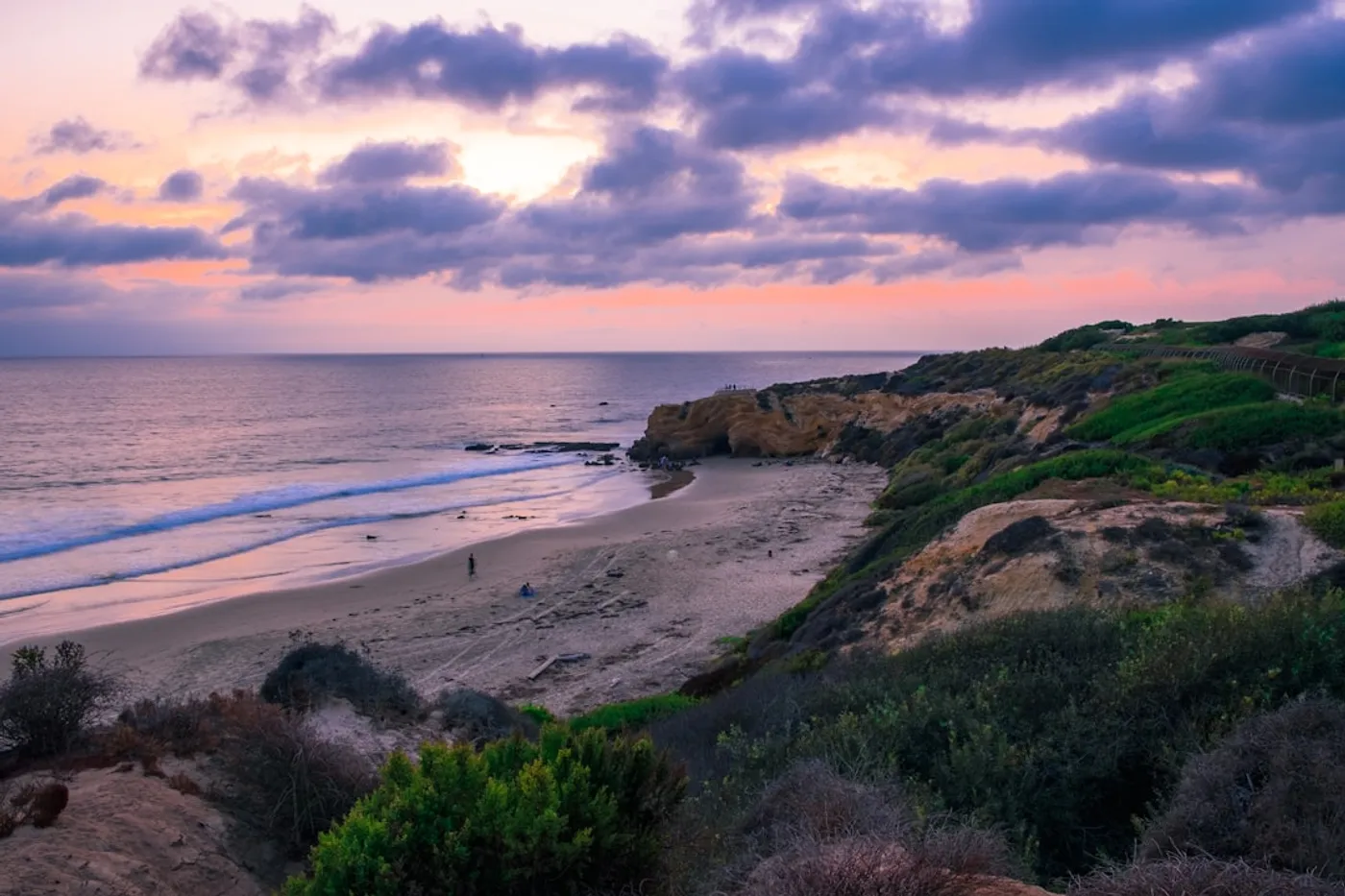
Crystal Cove — El Moro Canyon
moderateCrystal Cove's inland canyon — a cool, creek-fed gorge with a ridge loop option that earns sweeping views of the Pacific from the chaparral above.
Good to Know
- Admission
- $
- Time to Allow
- 2–4 hours
- Parking
- El Moro Canyon lot off PCH; state park day-use fee applies
- Best Time
- November through May; summer is hot on the ridge, pleasant in the canyon
- Difficulty
- moderate
- Dogs
- ✗ Not allowed
Great for
Most people who visit Crystal Cove State Park never cross Pacific Coast Highway. The state park’s inland section — the El Moro Canyon backcountry that stretches east from the coast into the hills above Newport Beach and Laguna — is a different environment from the famous beaches below, quieter and more demanding, with a trail system that ranges from a shaded creek-bottom walk to a strenuous ridge climb that deposits you on a fire road with Pacific views stretching from Point Dume to Catalina. The El Moro Canyon parking area off PCH is the main access point, and the transition from freeway to chaparral happens fast enough to feel disorienting.
The canyon trail follows El Moro Creek through a wide gorge shaded by California sycamores and coast live oaks. In wet months the creek runs through this section and the canyon bottom is cool and dense with streamside vegetation — willows, mule fat, and toyon forming a canopy above the trail. By summer the creek reduces to occasional pools, but the shade holds. The canyon floor trail is the gentler option: an out-and-back of three to five miles along the creek that gains elevation gradually and stays pleasant even on warm days. It’s the route to take if you’re prioritizing a cool, quiet walk over views.
The ridge option changes the character of the hike completely. A series of connector trails and fire roads climb from the canyon floor to Moro Ridge, gaining several hundred feet of elevation quickly before leveling on the ridgeline above the coastal bluffs. The views from the ridge — Pacific to the west, Catalina visible on clear days, the Santa Ana Mountains to the east, and the chaparral slope dropping away to both sides — justify the climb. The full loop combining the canyon floor going in and the ridge coming back is the standard way to experience both environments in one outing; the descent from the ridge back to the parking area is long enough to make your legs aware of it.
The ecology on the ridge is distinctly different from the canyon: exposed chaparral with less shade, a drier plant community of chamise and ceanothus, and considerably more wind. Rattlesnakes are present in the warmer months and tend to be more active on the south-facing ridge slopes than in the creek bottom. The park’s trail system extends further into the backcountry and eventually connects to the Laguna Coast Wilderness Park trail network to the south, making longer multi-mile traverses possible for hikers who arrange a shuttle. Most of the interior trails are shared with mountain bikes on designated fire roads.
The parking area at El Moro Canyon requires the Crystal Cove State Park day-use fee, which also covers access to the beach section across PCH. Restrooms are at the parking lot. The trailhead has a self-registration station with trail maps. There is no water available on trail; the canyon creek is not safe to drink without treatment. Weekday mornings in winter are the quietest time on these trails. Summer weekend afternoons on the ridge are warm and exposed — the canyon-only route in that season is a better choice.