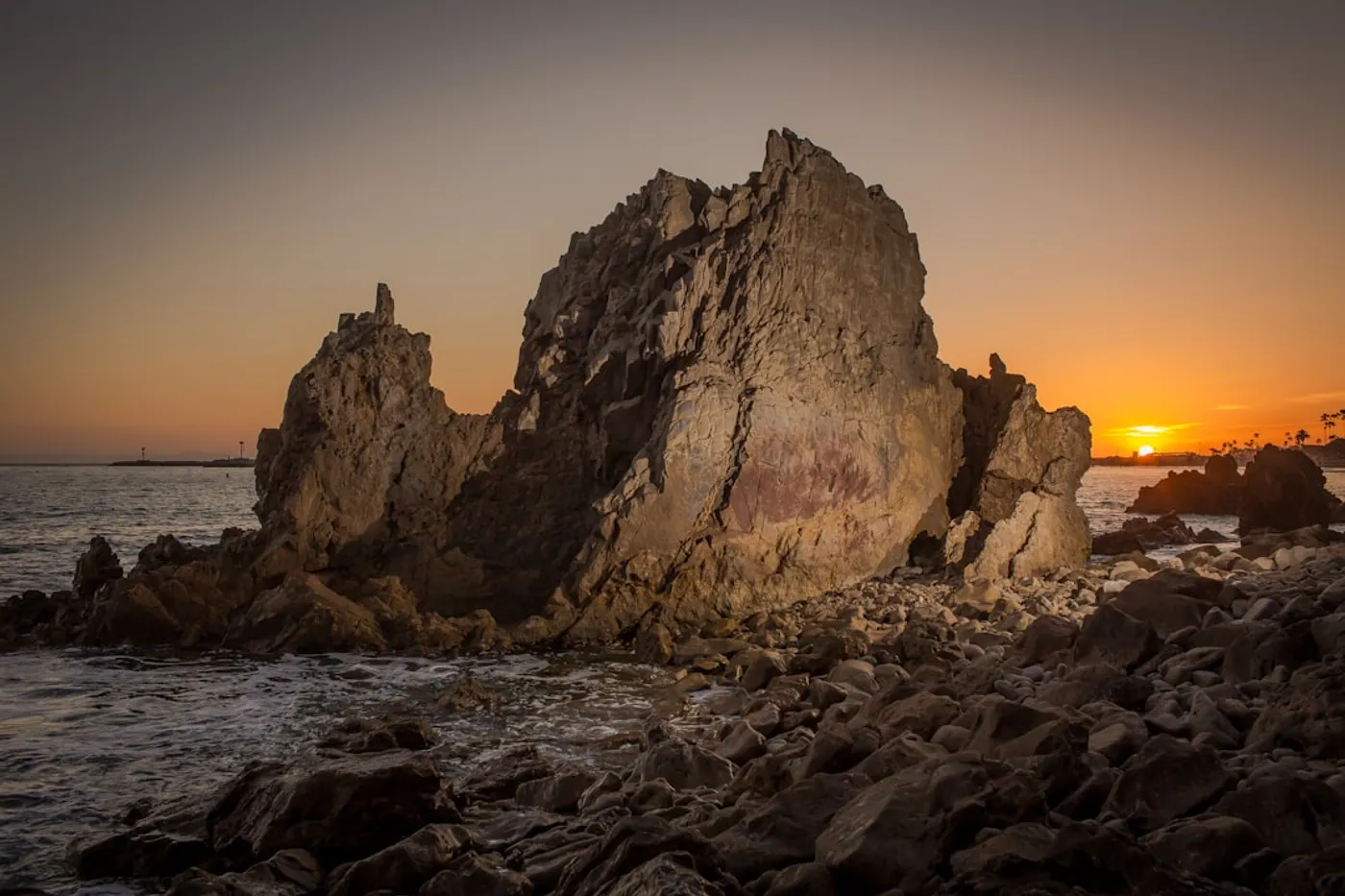
Little Corona del Mar Tide Pools
The best family tide pooling in OC — a protected cove with dense intertidal life, calm summer swimming, and a rocky reef that rewards a well-timed visit.
Good to Know
- Admission
- Free
- Fees
- Free
- Time to Allow
- 2–3 hours
- Parking
- Street parking on Ocean Blvd at Poppy Ave; limited spots, arrive early
- Best Time
- Low-tide mornings October–March for best pools; summer for calm swimming
- Dogs
- ✗ Not allowed
Great for
Little Corona del Mar Beach is the most family-accessible concentration of tide pools in Orange County — a protected cove tucked below the bluffs at the end of Ocean Boulevard in Corona del Mar, where the rocky reef platform extends far enough from the water’s edge to be safely explored at low tide by children who can walk steadily on their own. The pools here hold the full range of Southern California intertidal life: hermit crabs and turban snails in the high zone, sea anemones and purple urchins in the mid zone, and on a genuine minus tide in fall or winter, the lower reef exposes nudibranchs, small octopus, and larger aggregations of organisms that the upper pools don’t hold. For a child encountering a living tide pool for the first time, Little Corona is about as good a site as the California coast offers at this latitude.
The protected status of the area matters for the quality of what you’ll find. Little Corona sits within the Crystal Cove State Marine Conservation Area and the adjacent Robert E. Badham Marine Life Refuge, which together prohibit the take of any marine life from the pools. The protection has had the expected effect: organism density here is noticeably higher than at comparable unprotected sites nearby, and while the pools take wear from heavy visitor traffic, they recover better than they would without enforcement. California State Parks rangers periodically lead tide pool interpretation programs at the site on low-tide weekend mornings; checking the State Parks website for scheduled programs is worthwhile for families who want guided context.
Tidal timing determines the quality of the visit. The best conditions are on minus tides — those below zero on the NOAA tide gauge — which occur in the morning hours on the Southern California coast, typically in the winter and early spring months. The NOAA tide prediction tables for the Newport Beach gauge are accurate for this location and are freely available online. A summer afternoon at high tide produces a very different experience from a winter morning at minus-one: plan the visit around the tide, not just the weather. A quick bookmark to the NOAA site on your phone is the most important piece of preparation.
Access to the beach requires a walk down a staircase from the bluff-top parking area, and exploring below the high tide zone involves scrambling on irregular wet rock. Closed-toe shoes with rubber soles — old sneakers that can get wet — are the right footwear for children and adults planning to explore the lower pools. The beach receives more visitors than the parking area can easily accommodate on good-tide weekends; arriving early is more important here than at flat-sand beaches, where latecomer parking is less of a constraint. Street parking on Ocean Boulevard and the surrounding residential streets fills completely on low-tide Saturdays in winter.
The cove itself is also a pleasant swimming beach in summer, with calm water behind a natural rock breakwater that reduces wave action compared to the main Corona del Mar State Beach just around the bluff. The combination of reliable tide pooling at low water and calm swimming at high water in a single location makes Little Corona worth building a half-day around rather than treating as a quick stop.