Bolsa Chica State Beach
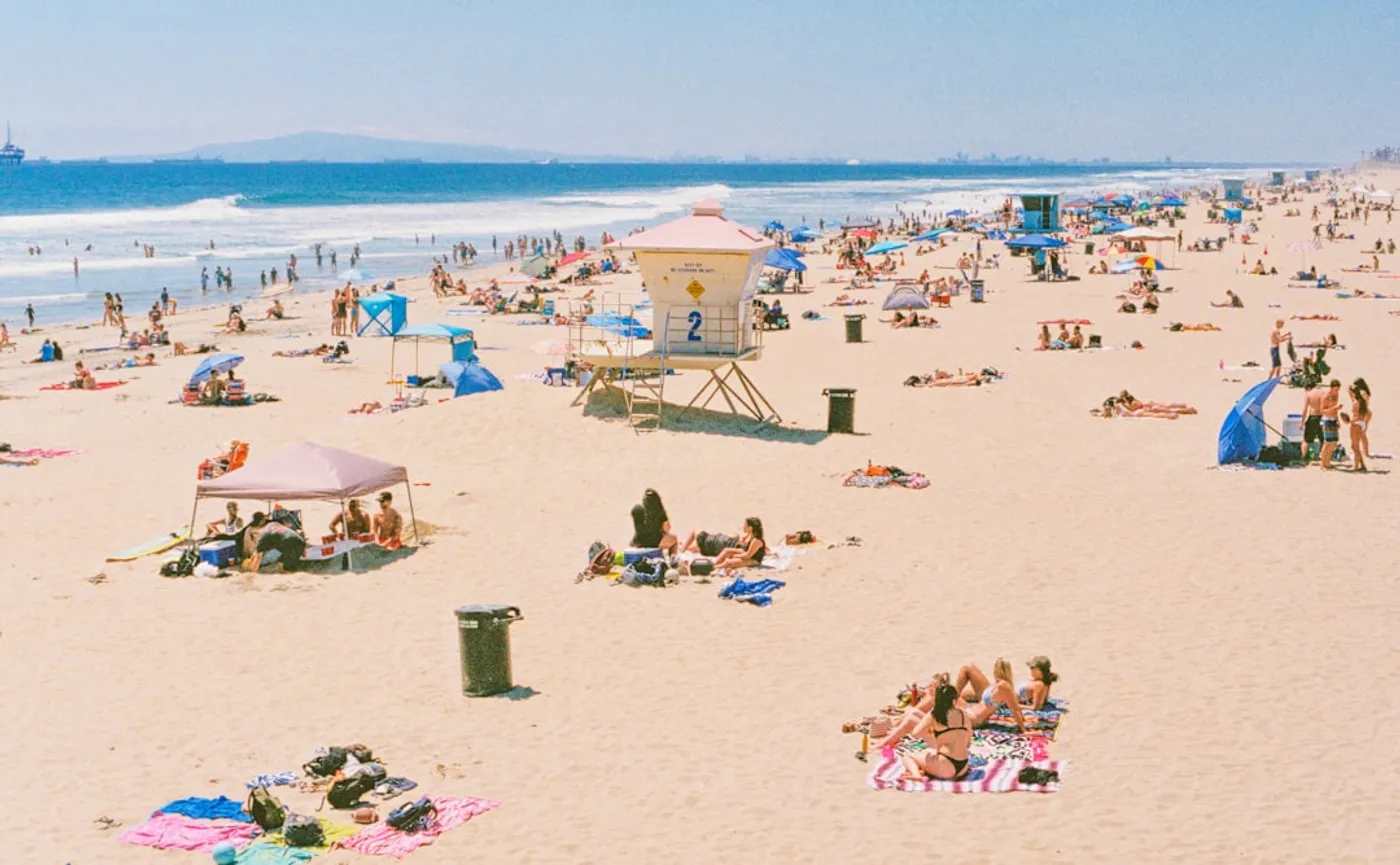
Three miles of uncrowded north OC coastline across PCH from Southern California's largest restored coastal wetland — a two-environment day in one stop.
Good to Know
- Admission
- $
- Time to Allow
- Half day to full day
- Parking
- Paid state park lot along PCH
- Best Time
- Year-round; October–April for exceptional wetland birding; summer for beach and camping
- Dogs
- ✓ Allowed
Great for
Bolsa Chica stretches for roughly three miles of generally uncrowded coastline just north of the Huntington Beach Pier, and the contrast it creates with the busy scene around the pier couldn’t be more deliberate. The beach is wide, windswept in the afternoon, and backed by PCH with the Bolsa Chica Ecological Reserve on the other side. Standing at the waterline here, you’re looking at an uninterrupted horizon in one direction and, a short walk across the highway, at 1,400 acres of restored saltwater marsh where great blue herons, egrets, and godwits work the mudflats in the foreground. It’s two entirely different Southern California environments within five minutes of each other.
The beach itself draws recreational anglers who surf-fish for barred surf perch and corbina along the shoreline; the waves are consistent but less organized than the sandbars at Huntington Pier — adequate for longboarding on small days, good for bodysurfing and body boarding in the shore break. On weekdays the beach is genuinely empty by south OC standards, which makes it popular with surfers who prefer a less managed environment and with families who want space without driving to San Diego. Dogs on leash are allowed on the beach, which is unusual in Orange County and makes Bolsa Chica a practical option for visitors with dogs.
The Bolsa Chica Ecological Reserve across PCH is operated by the California Department of Fish and Wildlife and is one of the largest remaining coastal wetlands in Southern California. A three-mile loop trail runs along the mesa edge and through the salt marsh and takes about 90 minutes at a comfortable walking pace. The trail is flat, unpaved, and passable year-round. Fall migration — October and November — brings southbound shorebirds through in the thousands, including dunlin, western sandpiper, marbled godwit, and occasionally rarer species that keep the local eBird sighting lists active. Spring migration from February through April reverses the flow. Year-round residents include Belding’s savannah sparrow (a state-listed threatened species that nests only in coastal sage and pickleweed), black-necked stilt, and American avocet. The reserve parking lot is on PCH directly across from the state beach entrance and is free.
RV and tent camping is available at the state beach through Reserve California. The sites line up along the beach-side lot and have PCH traffic noise to contend with overnight, but the dawn light on the water from a camp chair is a reasonable trade. Summer and holiday weekends book out well in advance; weekday spots in winter are considerably more available. Day-use visitors simply pay the parking fee at the gate — no reservation needed unless you’re camping.
The combination of beach and ecological reserve makes Bolsa Chica the most layered single-destination option in north Orange County. The timing that works best: arrive early, cross PCH for a morning loop through the reserve before the heat and wind build, then cross back for a beach afternoon. The reserve’s birds are most active in the morning, and the beach is most pleasant before the afternoon onshore wind arrives.